
Checking Douglas County Criminal History
No single search produces a complete Douglas County criminal history. The best first channel depends on the question. Use the Douglas County ICON WebSearch for Superior and State Court cases. Use the Sheriff's daily reports and jail tools for a recent arrest or custody event. City citations may require Douglasville, Villa Rica, or Austell Municipal Court. Georgia Felon Search adds a statewide felony-conviction slice, while a personal GCIC inspection gives a broader fingerprint-supported Georgia history.
Gather the full name, date of birth, known aliases, incident date, and case or report number before searching. The clerk tells name searchers to enter LAST NAME, FIRST NAME. Similar names need careful comparison. A portal match should be tied to the court, filing date, charge, and public identifiers before it is treated as the right case.
- Search ICON in both Superior and State Court when the charge level is uncertain.
- Check dated arrest reports and current jail information for recent custody.
- Search the issuing municipal court when a city citation does not appear in ICON.
- Read each charge and disposition, not just the overall case status.
- Order the official file or certified disposition when proof or correction matters.
Douglas County ICON Search Fields
ICON is a locator and docket-reading tool, not the official file itself. A case number is the strongest key. Name searches can be widened for spelling changes, then narrowed by court, filing date, category, or status when those controls are available. The result may show that a document was filed without offering its image.
| Field | Best use | Caution |
|---|---|---|
| Case number | Exact known file | Keep portal punctuation |
| Party name | Unknown case number | Use last name first |
| Court or category | Separate felony and misdemeanor files | Municipal matters may be absent |
| Date or status | Narrow common names | Disposed does not state the outcome |
The Clerk of Superior and State Courts identifies the portal and keeps the controlling file. This official clerk view shows why the portal and the records counter work together.
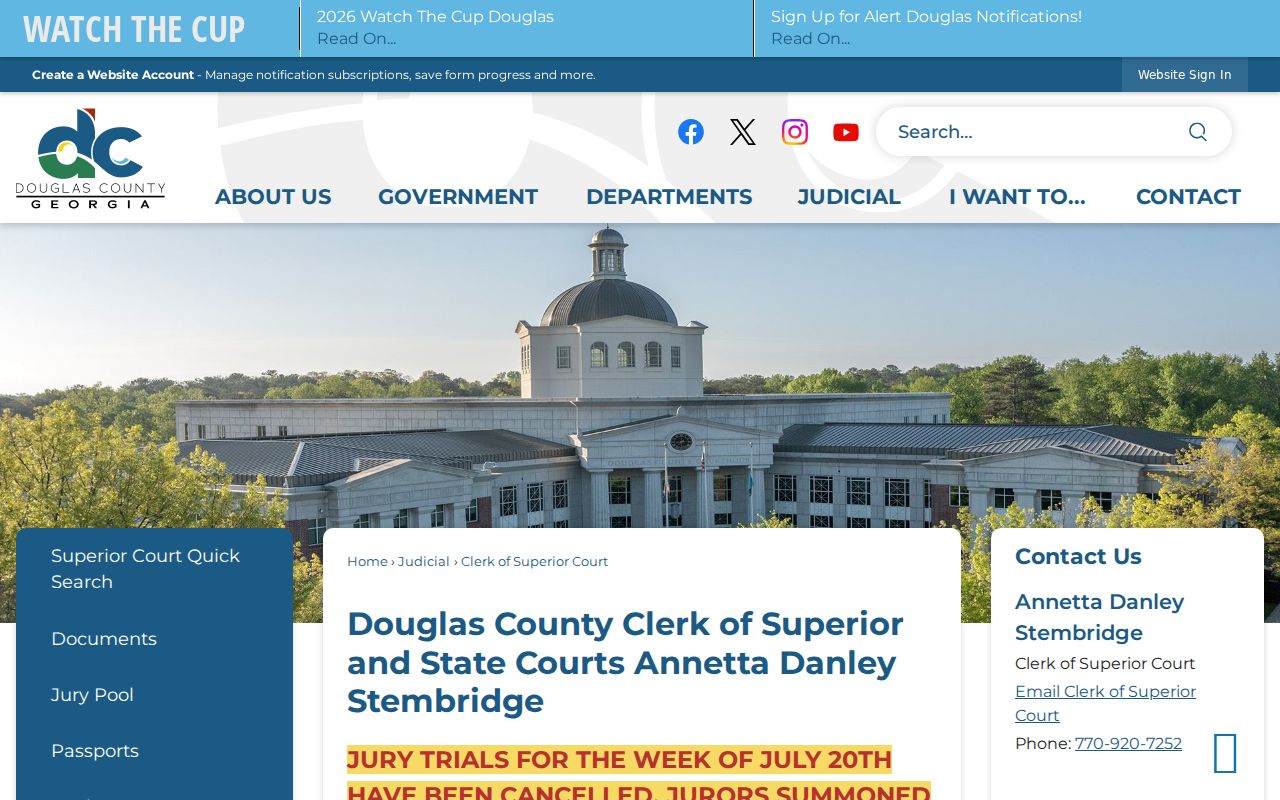
A certified disposition from the clerk is the better source when an online status is unclear or a state history needs an update.
Georgia Background Checks and Records
The Georgia Bureau of Investigation's Georgia Crime Information Center is the central repository. Georgia Felon Search accepts full name, race, sex, and date of birth and returns its stated felony-conviction information for $15. It is name based and conviction limited. It omits successfully completed First Offender and restricted or sealed information, so no result is not an identity-certified clearance.
For self-review, ask a participating sheriff or police agency about a Georgia history or schedule a GCIC record inspection. Georgia Applicant Processing Service, or GAPS, handles fingerprint capture for authorized agency processes. The requesting program supplies the service code, and results return through that authorized channel. The GCIC program page explains the repository's role.
State records also branch into custody and supervision. Georgia Department of Community Supervision records are distinct from a clerk docket or a jail entry.
Douglas County Record Offices
Two Douglasville counters hold most county criminal records, but their files are not interchangeable. The courthouse clerk at 8700 Hospital Drive keeps Superior and State Court pleadings, dockets, judgments, and certified dispositions. The Sheriff's Records Division and Adult Detention Center at 8470 Earl D. Lee Boulevard keep sheriff reports, booking material, jail records, served-warrant files, local checks, and restriction-processing records.
Clerk of Superior and State Courts
8700 Hospital Drive, Douglasville, GA 30134
770-920-7441
Weekdays, 8 a.m. to 5 p.m.
Sheriff's Records Division
8470 Earl D. Lee Boulevard, Douglasville, GA 30134
770-942-2121
Weekdays, 8 a.m. to 5 p.m.; payment ends at 4:30.
The Sheriff's contact page shows the law-enforcement and detention campus.
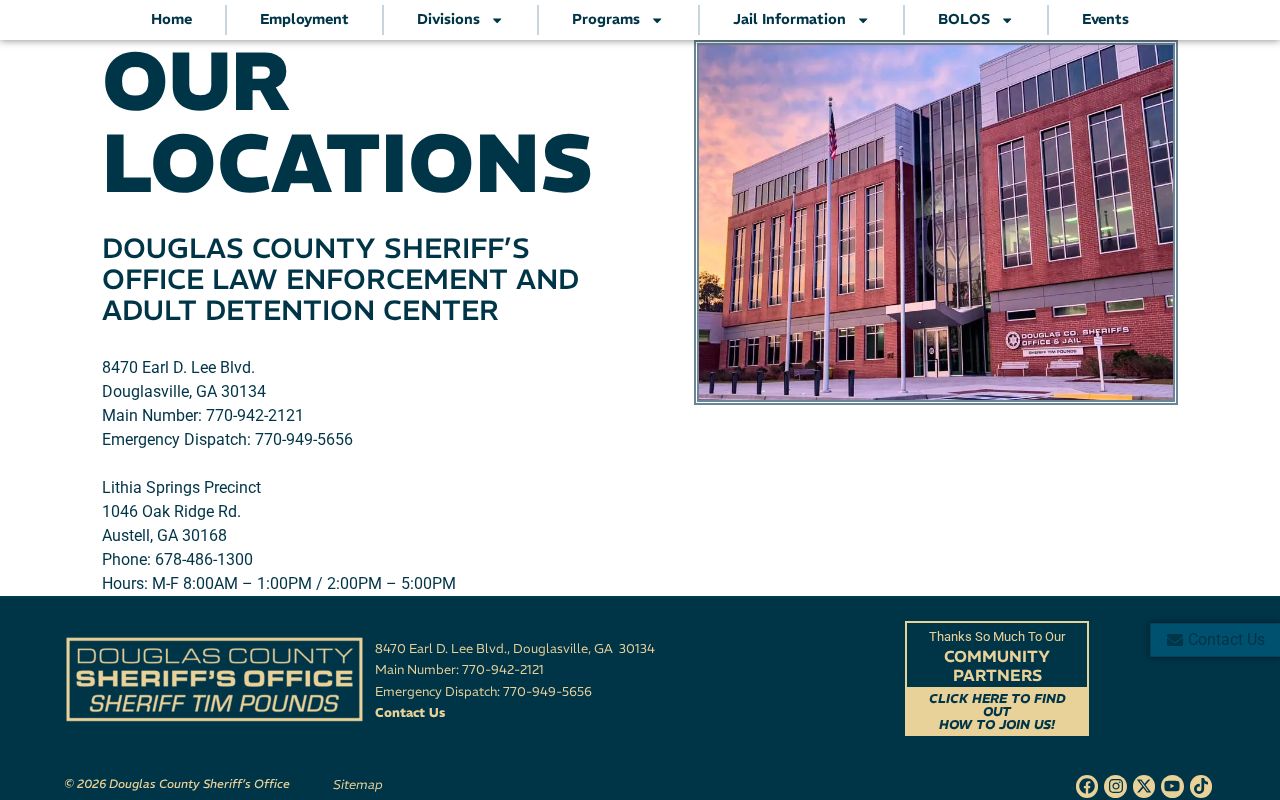
The separate county Records Department routes arrest incidents back to the sheriff and court cases to the clerk, which makes correct custody the key to a timely request.
The county's clerk collection reaches back to 1871, while electronic coverage and file format vary by era. Older records may require a counter request even when a modern name search returns nothing. The present courthouse opened in 1998, and the former courthouse on Veterans Memorial Highway is now the county history museum. An old address or courthouse photograph should therefore be checked against the current Hospital Drive office before a records trip.
Call the destination office before travel when accessibility, language help, security screening, parking, or device rules may affect the visit.
Douglas County Criminal Record Types
A criminal history is assembled from records created at different stages. Police narratives describe an event. Jail entries document intake. Prosecutors file accusations or seek indictments, and the clerk records what the judge does. GCIC then links fingerprint-supported arrest cycles to dispositions that agencies report. Each source answers a narrower question than the phrase criminal record may suggest.
- Incident and arrest reports describe the alleged event and officer response.
- Booking records show intake charges, agency, bond, and custody data.
- Court files contain filed counts, events, orders, outcome, and sentence.
- GCIC histories combine reported Georgia arrest, disposition, and custody data.
- Custody, supervision, and registry records come from separate jail, GDC, DCS, parole, and registry systems.
Record flow: arresting agency › Douglas County Jail › prosecutor and court › GCIC. Reporting time and amended charges can create temporary differences between the stages.
Warrants add another split. A judge or court issues the process, law enforcement serves it, and the clerk may show later docket activity. The sheriff's Fugitive and Warrants Division publishes selected most-wanted material, not a complete public warrant database. A blank web result cannot confirm that no warrant exists. A person resolving their own possible warrant should call the responsible court or law-enforcement office and seek legal advice before appearing.
Douglas County Records Fees
The sheriff posts distinct prices because a short report, a local history, and restriction processing are different services. Records operates until 5 p.m. on weekdays but takes no payment after 4:30 p.m. In-person Visa, MasterCard, and Discover payments add a $2 convenience charge.
| Service | Posted amount |
|---|---|
| Accident or complaint report | $2 |
| Non-victim incident report | $2 |
| Local criminal background check | $20 |
| Record restriction processing | $25 |
| Open-record labor | First 15 minutes free, then $19.72 per hour |
| Paper copy | $0.10 per page |
A $2 incident narrative is not a full criminal history, and the $20 check does not supply certified court pleadings. Confirm current scope and identification requirements with Sheriff's Records before visiting.
What Douglas County Records Show
Read the record according to the office that created it. A booking file emphasizes custody and intake allegations. A court docket emphasizes filed counts and judicial events. GCIC adds identification data and reported Georgia dispositions, but public products withhold sensitive identifiers. Financial entries may separate bond, fines, statutory surcharges, costs, restitution, and payments.
| Name & Identifiers | Names, aliases, date of birth, and lawfully public descriptors used to distinguish records. |
|---|---|
| Arrest / Booking Data | Arresting agency, booking date, intake charges, bond, release, or hold information. |
| Charges & Statutes | Each alleged or filed count and its Georgia code reference. |
| Disposition | The result for each count, such as conviction, dismissal, acquittal, or nolle prosequi. |
| Sentence | Custody, probation, fines, restitution, or other terms ordered by the court. |
| Custody / Supervision Status | County jail, state custody, probation, or parole data held in separate systems. |
Douglas County Jail Snapshots
The Sheriff's Daily Reports page groups arrest, headcount, calls-for-service, and bond reports. They should not be read as the same record. An arrest report is a dated booking snapshot. A headcount measures custody at a point in time. A calls report includes events that produced no arrest, while a bond report does not prove that a person was released.
A current inmate result can disappear after release or transfer even though the dated report remains. Search spelling variants and call the sheriff with the full name and date of birth if a recent booking cannot be found. For state custody, move to GDC Offender Search. Federal custody requires the Bureau of Prisons locator.
Booking also happens before the prosecutor's final charging choice. Jail staff record the agency and charges presented at intake after identity, warrant, safety, medical, property, photograph, and fingerprint steps. A later accusation or indictment may reduce, replace, or omit those counts. The dated arrest report preserves the intake snapshot; the court disposition explains how the prosecution ended.
Douglas County Criminal Record Access
The Georgia Open Records Act presumes access to existing public records, subject to exemptions and lawful charges. A response is generally due within three business days, but that response may be production, clarification, a fee estimate and timetable, or an exemption citation. Agencies need not answer questions or create a new compilation. Describe the existing file, date range, agency, report or case number, and preferred delivery format.
Key Statutes:
O.C.G.A. §§ 50-18-70 through 76 - establishes access, response, electronic-record, and reasonable-charge rules.
O.C.G.A. § 35-3-34(d.2) - authorizes the public felony-conviction channel with specified identifiers.
O.C.G.A. § 35-3-37 - governs eligible record restriction and related sealing routes.
Juvenile data, protected victim details, Social Security numbers, sealed material, and some active-investigation or security information may be withheld. Ask for segregable public portions when a file contains both open and protected material.
Douglas County's administrative JustFOIA channel does not take custody of every public record. Court pleadings go to the clerk, and arrest-related incident reports go to the sheriff. E911 and Georgia State Patrol records have their own custodians. A focused request names the creating agency, date range, existing document, event number, and whether inspection or copies are preferred. Keeping the request number and fee approval clear can prevent avoidable delay.
DC Sheriff Mobile Record Tools
The DC Sheriff GA Mobile app advertises inmate information, most-wanted material, tips, school resources, and alerts. Treat each feature as an operational lead rather than a certified criminal record. A most-wanted item is not a full warrant inventory, and an inmate listing does not state the final court outcome.
The sheriff's mobile listing helps explain how residents may reach jail and alert features outside the main website. Use the clerk file for the prosecution result and contact law enforcement directly about a possible active warrant. Do not attempt to detain or confront anyone.
Douglas County Restricted Records
Georgia calls its main process record restriction. It limits eligible GCIC arrest-history information from ordinary noncriminal-justice disclosure; it does not destroy every agency record. Court-record sealing is a related but separate request under O.C.G.A. § 35-3-37(m). First Offender discharge and exoneration is another distinct mechanism.
Start with the certified disposition. For arrests before July 1, 2013, the GBI restriction form routes through the arresting agency and prosecutor. Newer eligible outcomes are generally processed by the prosecutor when the disposition is entered. Douglas Sheriff's Records lists $25 restriction processing before the payment cutoff. If GCIC still lacks the result, send the certified update to GCIC rather than asking the clerk to change a state repository entry.
Douglas County Custody Systems
County jail, state prison, probation, parole, and federal custody are separate record universes. The Douglas County Jail covers local pretrial and shorter-term custody. GDC Offender Search covers current and some former state offenders. The Department of Community Supervision supervises state felony probationers and parolees, while the Georgia State Board of Pardons and Paroles makes parole decisions.
The Georgia parole authority provides the official state route.
A sentence in the Douglas County court file remains the best public evidence of what the judge ordered when a live supervision status is not published.
Douglas County City Criminal Records
City police departments create their own reports, and municipal courts keep city citation and ordinance files. Douglasville is the county seat and has a combined police and municipal court campus. Villa Rica and Austell cross county lines, so a mailing address alone does not establish which county jail or trial court holds the next record. Confirm the incident location, arresting agency, and issuing court before moving to county systems.
Douglasville Criminal Records
Police reports, city citations, and municipal court records start at the Fairburn Road public-safety campus.
Villa Rica Criminal Records
Check which side of the Douglas-Carroll line produced the police, jail, and court file.
Austell Criminal Records
Municipal cases begin at the Threadmill Complex, while county custody depends on incident location.
Douglas County City Record Sources
Douglasville's Public Records Center is the city channel for municipal administrative requests and routes police work through the proper city office.
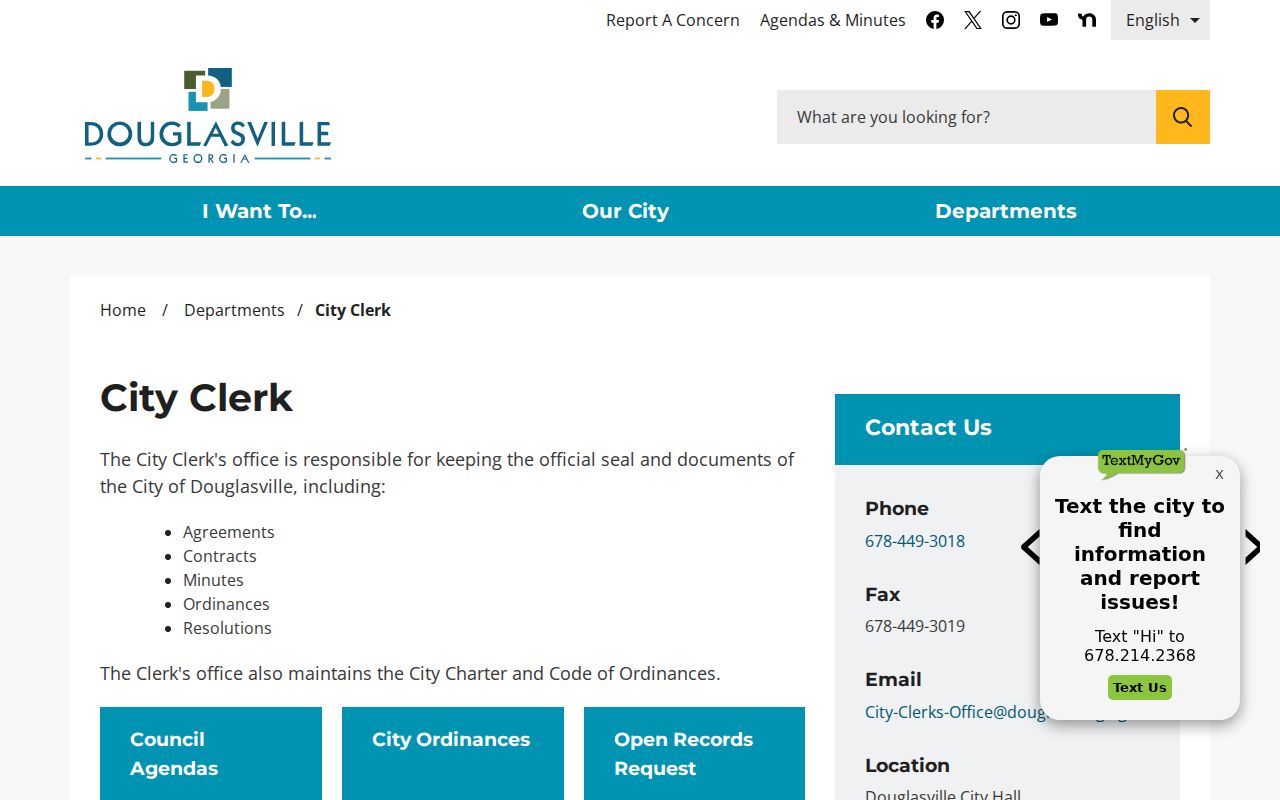
Douglasville police reports do not become clerk records merely because police and Municipal Court share a building. A custodial arrest can add a county jail record, and a bound-over or filed prosecution can later add a Superior or State Court case.
The Austell Police Department is another official city source.
Austell and Villa Rica records require special care because whole-city data and agency contacts can span more than one county.
Douglasville Police records usually remain with the city even when the event occurred near a county building. Villa Rica requesters should identify whether the incident fell on the Douglas or Carroll side. Austell cases can move into Cobb County systems because most of that cross-county city lies there. The arresting agency on a booking entry and the issuing court on a citation are more reliable jurisdiction clues than a postal city name.